
Guest guide basics
What to include in a vacation rental guest guide
A useful guest guide helps people arrive, settle in and find what they need without asking you every time. Start with the questions a first-time visitor would have, then arrange the answers around their stay.
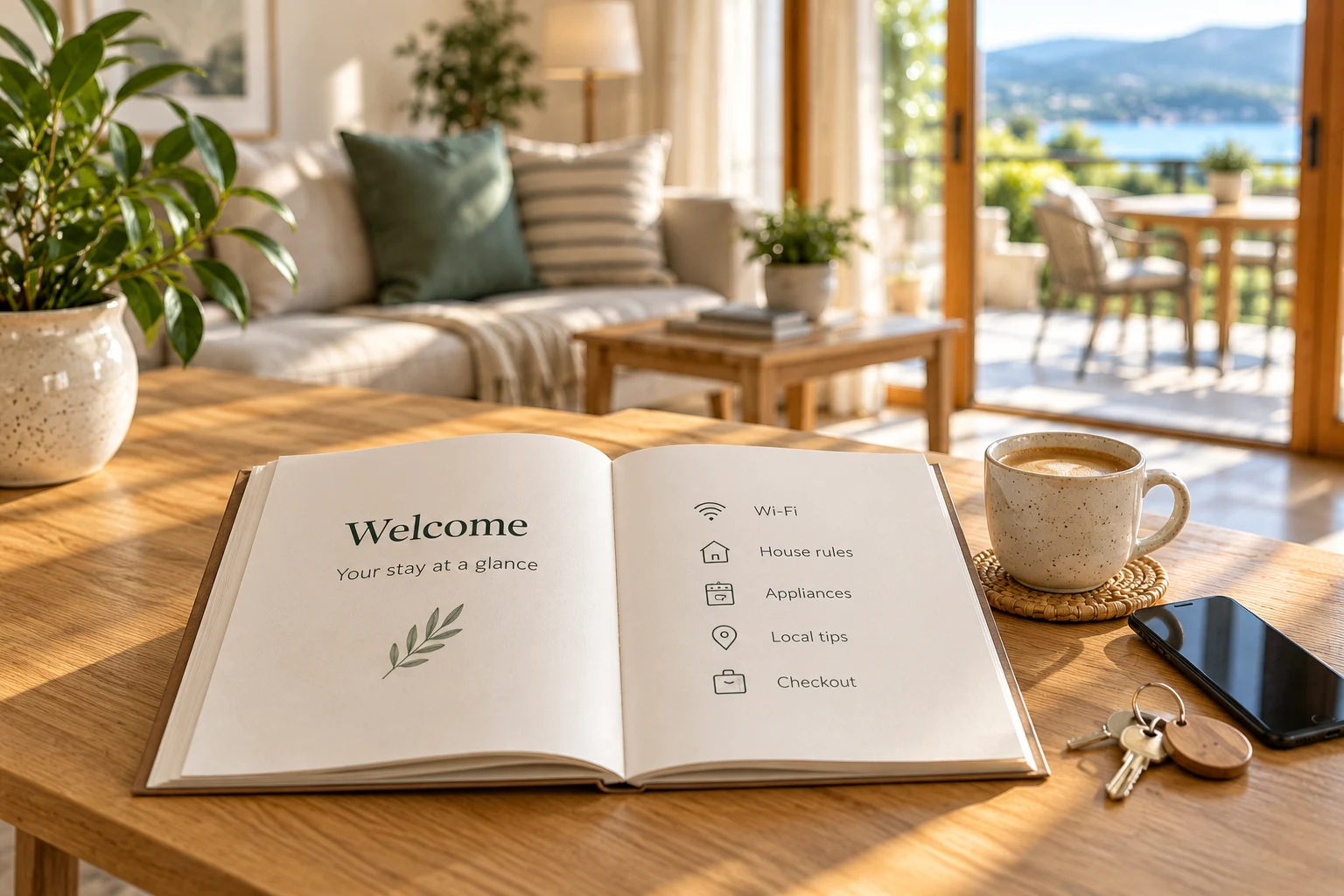
Start with the first hour.
Someone arriving after a long journey is looking for the right door, a place to park and a way to get inside. Put that information ahead of your property story or restaurant recommendations.
Keep the instructions specific. “Park in the driveway” may be obvious to you, but a guest needs to know which driveway, which space and whether another vehicle needs access. A labelled photograph can explain more than another paragraph.
- The address and any directions that a map app might miss.
- Check-in time, parking location and how to identify the entrance.
- How to contact you if arrival does not go to plan.
- Wi-Fi network and password, somewhere easy to find once inside.
Explain the things guests will actually use.
Walk through the property as if you have never stayed there. Which remote turns on the TV? Where are the spare towels? Is there a switch that guests will struggle to find? Those small details belong in the guide.
Use short sections with familiar labels: Wi-Fi, Heating, Coffee, Laundry. For appliances, describe the everyday task and match your instructions to the exact model. Link to the manufacturer’s manual for anything more involved.
- Heating and cooling controls, including any limits guests need to know.
- Coffee machine, TV, laundry and other frequently used appliances.
- Where to find towels, bedding, bins and household essentials.
- Property rules, quiet hours, pet arrangements and shared-space expectations.
- Verified local emergency contacts, the property address and the location of safety equipment.
Offer a few useful local choices.
A long directory makes guests do the research again. Start with places that solve a need: coffee on the first morning, a reliable grocery shop, somewhere for dinner and an activity for a rainy day.
Give each recommendation a reason, a location and a useful link. If a restaurant is a special-occasion choice or a beach needs a car, say so. Make it easy for guests to choose what fits their plans.
Keep checkout short and findable.
Give checkout its own heading. State the departure time first, then use a short checklist for the tasks you actually expect. Keep it consistent with what guests saw when they booked.
Explain where keys go, how to secure the property and how to contact you about a forgotten item. Avoid adding a second set of instructions that contradicts your booking messages.
Make the guide easy to use and maintain.
Use a contents list and descriptive headings so guests can jump straight to an answer. Keep paragraphs short enough to read on a phone. Where a picture helps, show the real parking space, control panel or entrance.
A web link is useful before arrival; a printed copy helps once guests are inside. Keep a single approved source for the information, record the last update and check both versions when something changes.
Before you share the guide, ask someone unfamiliar with the property to find the Wi-Fi details, use the TV and explain checkout back to you. Every question they ask is a clue about what needs a clearer explanation.
More practical advice
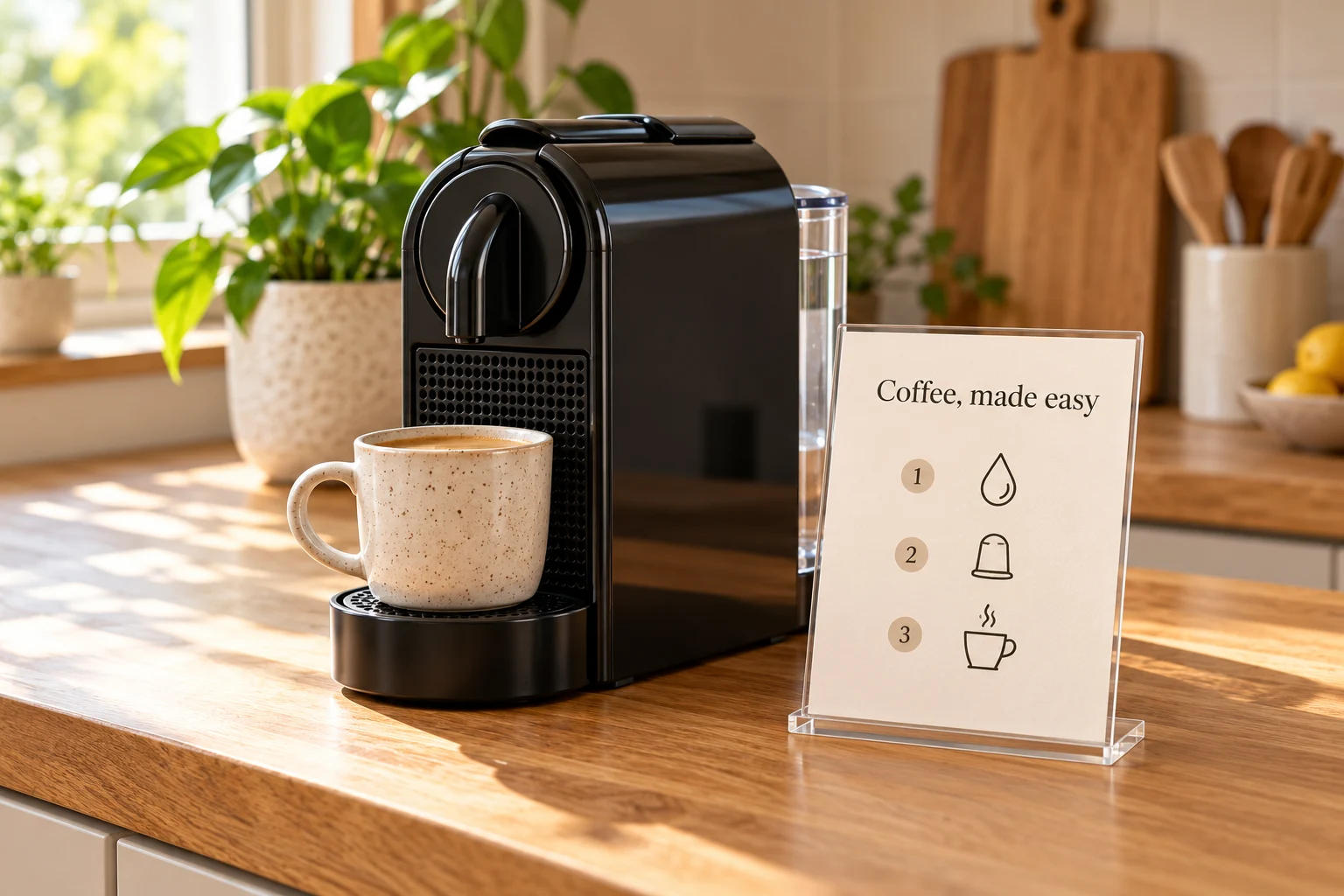
Clear instructions
Appliance instructions guests actually understand
Make the coffee machine, TV and heating easier to use.
Read article
Local recommendations
Local tips your guests will use
Choose useful places and explain why you recommend them.
Read articleReady for your own guest guide?
Tell me about your property and what you need. I’ll reply with the next steps.