
Clear instructions
How to write appliance instructions guests actually understand
Your guests want a cup of coffee or a comfortable room. They do not want to learn a new appliance. Good instructions explain the simplest everyday task, using the controls and labels they can see in front of them.
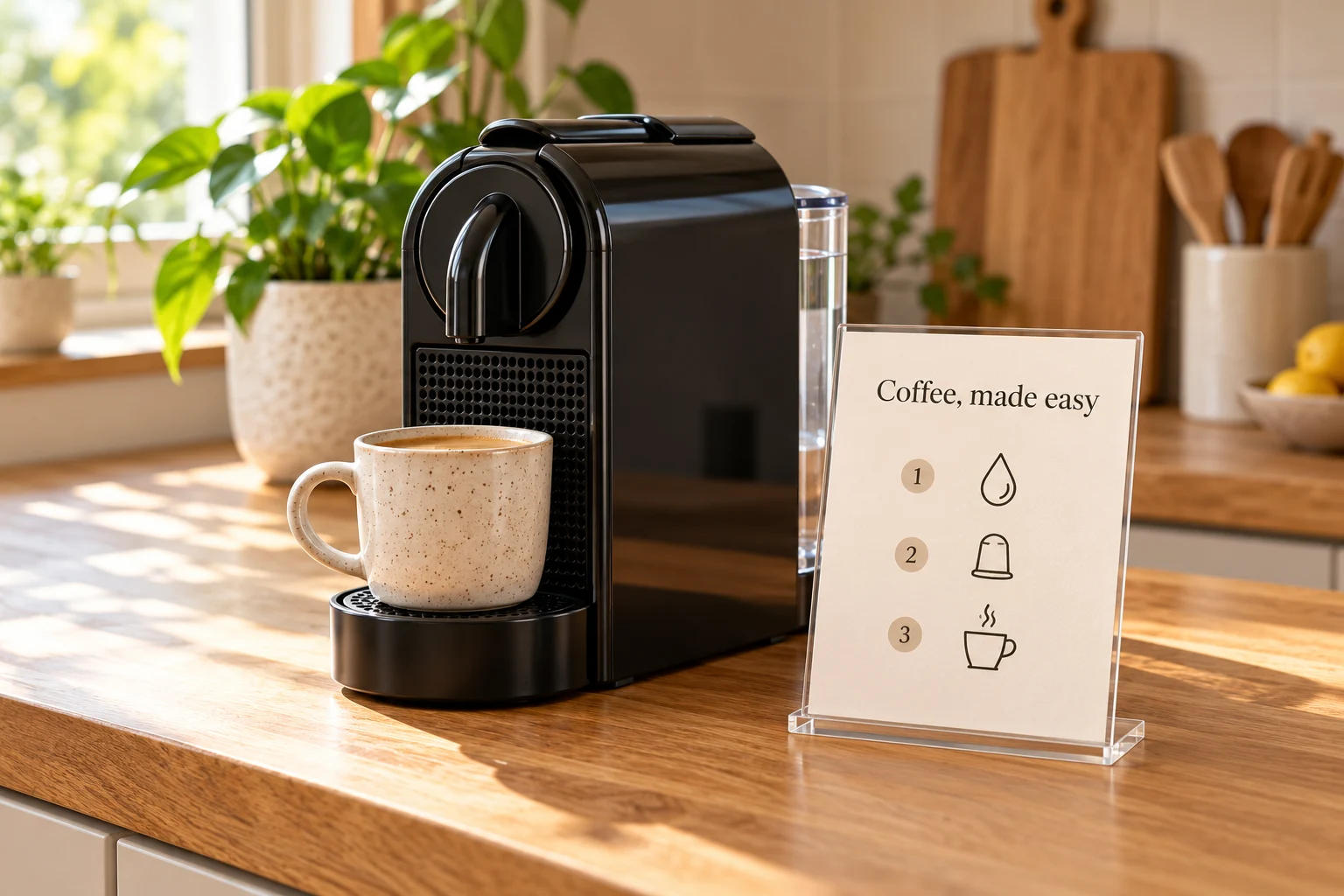
Write for one task at a time.
“Using the television” is a broad topic. “Watch a streaming app” gives you a clear starting point. Separate tasks if they use different controls or inputs.
For a coffee machine, explain how to make the usual drink. Put cleaning or maintenance instructions elsewhere if they are not something you expect guests to do. For heating, show the approved controls and any settings guests should leave alone.
Check the exact make and model before writing. Similar-looking machines can work differently. Your manufacturer’s instructions are the reference; the guest guide is the short version of the routine steps.
Name the button, then describe the result.
Use numbered steps in the order a guest will follow them. Start each step with an action and use the wording printed on the control. Avoid “the usual setting”, “the other remote” or “just reset it”.
Tell guests what they should see after an important step. A light that stops flashing or a menu that appears helps them know whether to continue. Include waiting time only if you have checked it for that device.
Use a photograph when the control is hard to describe.
Photograph the actual appliance in good light. Crop closely enough that guests can recognise the buttons, but leave enough context to identify the device. Add a simple arrow or label only where it is needed.
For two similar remotes, one photograph showing both with clear labels can prevent confusion. For a thermostat, point out the control guests should use rather than covering the picture with every possible function.
Keep the full sequence as readable text too. Photos are helpful, but guests should not have to decipher tiny lettering inside an image.
Give guests a sensible stopping point.
Add one short “If it does not work” note for a common, harmless issue you have verified, such as checking that they have selected the named TV input. Then tell them how to contact you.
Do not ask guests to dismantle equipment, bypass a safety feature or keep trying a device that seems damaged. Avoid generic reset advice. If a fault needs more than a normal user action described by the manufacturer, have the guest contact you.
- Identify the device and the task.
- Use the exact control names and approved settings.
- State what guests should see when a step works.
- Add a clear contact route if the routine steps do not help.
Test the instructions without helping.
Ask someone unfamiliar with the appliance to follow your draft. Watch where they pause. If you have to explain a step aloud, revise that step.
Put a short card beside a frequently used appliance and keep the fuller version in the guest guide. When equipment changes, replace the photo, instructions and printed card together. A clear guide for the old coffee machine will not help with the new one.
More practical advice
Guest guide basics
What to include in a vacation rental guest guide
The details guests need, in the order they need them.
Read article
Local recommendations
Local tips your guests will use
Choose useful places and explain why you recommend them.
Read articleReady for your own guest guide?
Tell me about your property and what you need. I’ll reply with the next steps.